Three reasons, and only one of them is about money
Split-screen did not disappear because publishers decided couch co-op was worthless. It disappeared because the cost of rendering it rose at the same time as the reward for building online play rose, and those two curves crossed somewhere around the middle of the last console generation. If you want the short version: it is mostly a rendering problem, partly a business one, and partly an engine-design one that nobody planned.
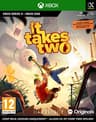
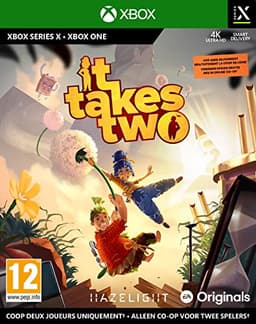
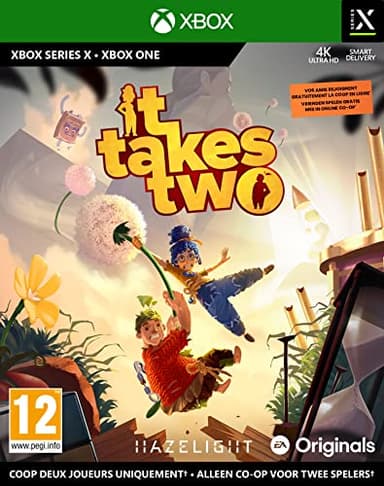
It is also not quite as dead as it feels. The list further down is the set of games that still do it properly, and the honest headline is that local co-op has largely moved genre rather than vanished - it now lives in co-op-first games like It Takes Two and family platformers, instead of in the big shooters where people remember it.
1. Rendering two views costs roughly twice as much
This is the big one and it is unavoidable physics rather than a choice. A split-screen game has to draw the world from two cameras at once. That means two sets of visible geometry, two sets of shadow calculations, two sets of reflections and post-processing - and it has to hold the frame rate while doing it.
In the era when split-screen was standard, the gap between what a game wanted to draw and what a console could draw was small. Games were simpler, draw distances shorter, lighting cheaper. Halving your rendering budget to add a second player was a real cost but a survivable one.
Modern rendering techniques made that much worse. Screen-space effects, dynamic global illumination and heavy post-processing are all tuned for one full-screen view, and several of them degrade badly or need rebuilding entirely when the viewport is halved. Developers are not deciding to skip a checkbox; they are deciding whether to cut the visual target for everybody in order to support two players on one machine.
2. Online play became the thing that gets funded
The commercial half. A game sells one copy to a household playing split-screen, and up to four copies to four friends playing online - and the online players also stay in a live service with a battle pass, which is where modern revenue sits.
That is not an argument that publishers are greedy so much as an explanation of where engineering time goes. Netcode, matchmaking, anti-cheat and server infrastructure all compete for the same team as local multiplayer, and only one of them has a revenue model attached. When a feature list gets cut late, local play loses that argument almost every time.
3. Engines quietly stopped assuming a second player
The underrated reason, and the one that explains why it rarely gets patched back in. Deep assumptions about there being one player accumulate throughout a codebase: one camera, one audio listener, one input device, one save context, one UI anchored to the full screen. Retrofitting a second local player touches all of it.
This is why "just add split-screen in an update" almost never happens. It is not a toggle - it is a structural change to how the game thinks about who is playing, and it has to be designed in from the start. Games that have it, had it from day one.
Why PC is the worst affected
Everything above applies to consoles. PC adds a fourth problem: the platform never assumed a second person in the first place. One keyboard, one mouse, one Windows user session, one audio output. Console SDKs have multiple-controller handling as a first-class concept; Windows does not. That is why the PC split-screen list is so much shorter than the console ones, and why it has its own page at split-screen games on PC.
What to check before you buy, now that it is rare
Because local play is no longer a default, it has to be verified per game - and the marketing will not tell you.
Read the store page's feature list, not the trailer.Storefronts list local co-op, shared-screen and split-screen support as explicit tagged features. If a game's store page does not claim it, assume it does not have it. "Co-op" on its own almost always means online only.
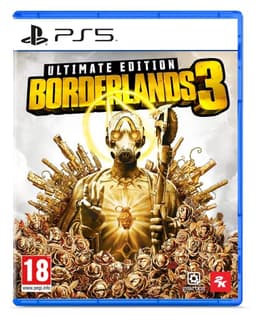
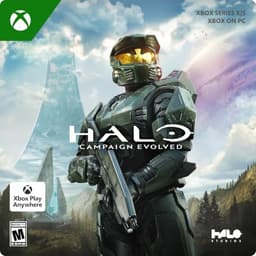
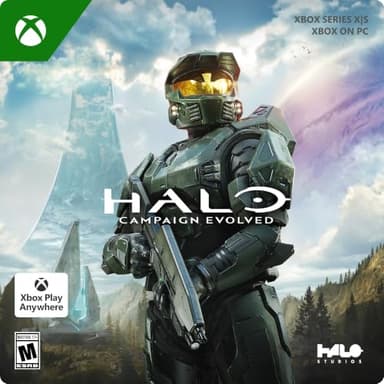
Check whether it is console-only. Several games ship split-screen on PS5 and Xbox but not on PC - Halo: Campaign Evolved is two-player split-screen on console, and Borderlands 4 is two on console as well. The PC versions of games like this routinely drop the mode.
Check the player count for the local mode specifically. A game advertising four-player co-op often means four online and two locally. The two numbers are different and the store page usually lists them separately.
Count your controllers. Local play needs one pad per player, and on PC the first player is usually best on keyboard and mouse. Our second controller guide covers what works where.