How your group actually plays together
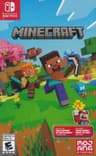
Local split-screen. The console versions support playing on one screen in the same room, which is the cheapest possible setup: one copy, several controllers. Our split-screen page covers the rest of that category.
Someone hosts. One person opens their world and invites the others. Free, simple, and it has one flaw that matters for a spread-out group: when the host is offline, nobody plays.
Realms.Mojang's own paid hosting - a private world run on their servers for the people you invite, rather than on somebody's console. For a group across time zones this is the difference between a world that is always there and a world that exists only when one specific person is awake.
Community servers. Enormous, mostly minigames, and a completely different experience from a private world with friends. Worth knowing they exist; not what most groups mean when they say they want to play Minecraft together.
What a group actually does for the first three evenings
This is the part reviews skip and the part that decides whether your group sticks with it. Evening one is survival: everyone gathers wood, someone digs a hole to sleep in, and you all die in avoidable ways. Evening two is a base. Evening three is when a group either finds its project - a farm, a mine, a village, a giant chicken - or drifts.
Groups that thrive give themselves a goal on evening three. Groups that do not tend to wander off. It is worth someone in the group being the one who suggests what to build, because Minecraft will never suggest it for you.
Cost, and what you are actually buying
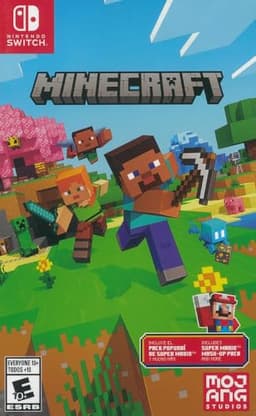
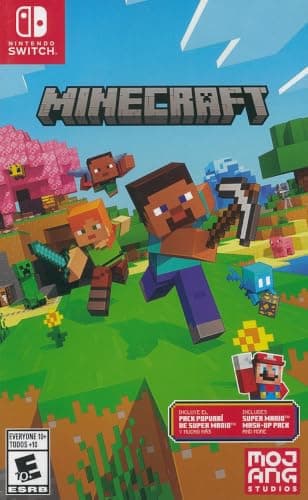
Minecraft is a one-off purchase per person, per version. There is no subscription for the base game, and updates have been free for over a decade - which is a genuinely extraordinary run and a large part of why it is such good value. Realms is a separate monthly cost, and only the host pays it.
Console players also need their platform's online subscription for multiplayer in most cases, which is a real cost people forget. Live prices for the console versions are in the table above; on a phone you are buying through the App Store or Google Play instead. Our free mobile games page covers what a phone-only friend can play if they would rather not spend anything.
How it compares
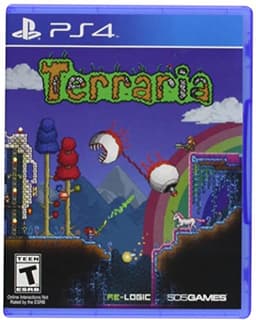
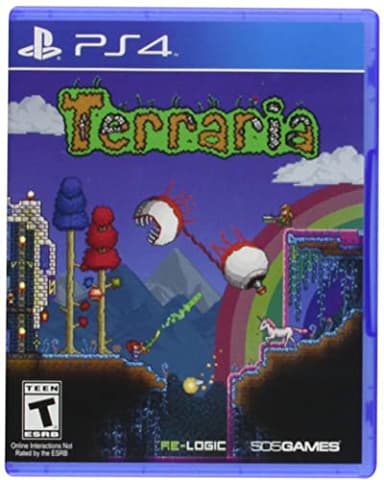
vs Terraria. The real decision for most groups. Terraria is cheaper, denser, 2D, and considerably more combat-focused - it is a game with bosses and a progress arc, where Minecraft is a space. Terraria handles up to eight players. We settle it properly in Minecraft vs Terraria.
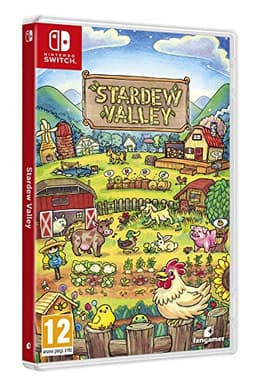
vs Stardew Valley. Both are calm and open-ended, but Stardew is same-platform only, which rules it out for most mixed groups. It is also structured - seasons, crops, villagers - where Minecraft is not. See our Stardew Valley review.
vs a party game. If what your group actually wants is a loud two hours, Minecraft is the wrong purchase entirely and Overcooked or Human: Fall Flat is the right one. Minecraft is for groups who want somewhere to keep coming back to.
The awkward bits
Griefing. A shared world means anyone can dismantle what anyone else built. Among friends it is usually a joke; with a large or open group it is a real problem, and private worlds exist for a reason.
Version drift. Updates land at different times on different platforms, and a console that has not updated will not connect. Update everything before a session.
Performance on Switch. Smaller render distance than the other consoles. It does not stop anyone playing together; the Switch player is just seeing less of the same world.
Verdict
Minecraft is the most reliable multiplayer purchase there is for a group that owns different things, and it is nearly unbeatable for friends who play at different hours. Buy Bedrock, not Java, unless your whole group is on PC. Give yourselves a project by the third evening. And if what you actually want is a game with a scoreboard and an ending, buy something else - our master roundup sorts the whole site by what your group is really after.